

Heating water constitutes a substantial portion of household energy use—often 15–20%. Transitioning to solar water heating (SWH) systems not only reduces utility bills but also eliminates greenhouse gas emissions associated with conventional water heaters The Washington Post+11ilmkidunya.com+11Solar Products Information+11Wikipedia. Globally, over 122 million solar hot water systems were in operation by the end of 2022, delivering an estimated 560 GW_th of capacity—a 3% increase from 2021 Wikipedia.
Countries like Cyprus and Israel lead per-capita usage, with adoption in over 90% of households The Guardian+1Wikipedia+1. Their success reflects a blend of abundant sunshine, supportive legislation, and affordability.
2. Types of SOLAR WATER HEATER🛁
Solar water heaters generally fall into two categories:
2.1 Active Systems
These use pumps and electronic controllers to circulate heat-transfer fluids—either water or glycol—through collectors and into insulated storage tanks MATEC Web of Conferences+14Encyclopedia Britannica+14The Guardian+14. Active systems are ideal for cooler climates, as antifreeze fluids prevent freezing.
2.2 Passive Systems
Relying on natural convection, these include two main types ilmkidunya.com:
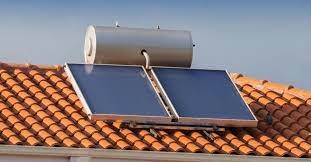
- Thermosiphon systems: Cold water flows down into the collector, heats up, then naturally rises into the tank.
- Integral collector-storage (ICS) units: Combine collector and tank into one unit, simplifying installation but with higher heat loss at night MATEC Web of Conferences+3Encyclopedia Britannica+3Solar Products Information+3ScienceDirect+1Solar Products Information+1.
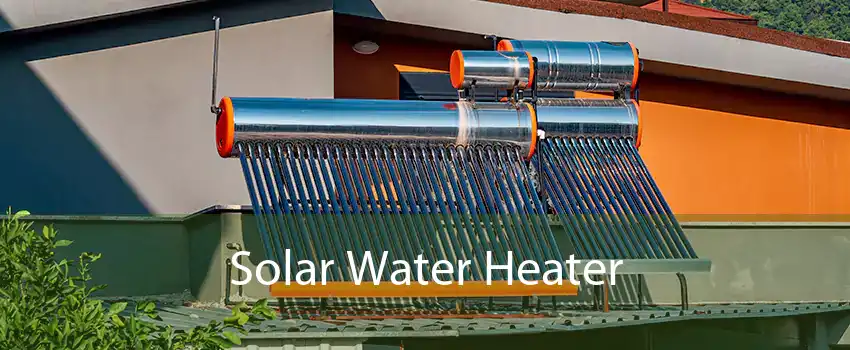
Flat-plate and evacuated-tube collectors are used in both system types:
- Flat-plate collectors: Cost-effective and widely used.
- Evacuated-tube collectors: More efficient in cold climates thanks to vacuum insulation Wikipedia+15Water Heater Handal+15Solar Products Information+15Solar Products Information.
3. Key Components Explained
A typical SWH system includes:
- Collector – Absorbs sunlight and converts it to heat, either via a fluid or by heating the water directly The Washington Post+5ScienceDirect+5Wikipedia+5Wikipedia+6Encyclopedia Britannica+6ilmkidunya.com+6.
- Circulation system – Pumps (active) or natural convection (passive) move fluid or water.
- Heat exchanger – Transfers heat from the collector fluid to storage water (used in indirect systems).
- Storage tank – Well-insulated to retain heat; may include a backup heater for cloudy days ilmkidunya.comilmkidunya.com+2Water Heater Handal+2Fenice Energy+2.
- Backup heating – Electric or gas units ensure hot water availability when solar heating is insufficient.
4. How SOLAR WATER HEATER Works
- Active setup: Collector heats fluid → pump activates when collector is warmer than tank → heat transferred via exchanger → system shuts off once temperatures align Water Heater Handal.
- Passive setup: Warmed water naturally rises; cooler water replaces it via gravity .
Systems rely on well-insulated pipes and tanks to minimize heat loss, particularly during night or cold seasons Encyclopedia Britannica.
5. Benefits of SOLAR WATER HEATER
5.1 Economic Savings
- Cut electricity/gas bills—by up to 50–80% in warm climates WIRED+14ilmkidunya.com+14The Washington Post+14.
- Systems typically pay for themselves in 3–5 years, with 20–30 year lifespans Solar Products Information+1Wikipedia+1.
- Eligible for incentives such as tax credits or subsidies Wikipedia+13Fenice Energy+13Solar Products Information+13.
5.2 Environmental Impact
- Renewable heating source with zero operational emissions .
- A 100 L system can reduce CO₂ emissions by over 1.5 tons annually Solar Products Information.
- Supports global CO₂ reduction—solar thermal capacity has cut emissions by ~30 million tons yearly Fenice Energy.
5.3 Low Maintenance & Reliability
- Passive systems require minimal upkeep; active systems need annual checks Wikipedia+3ilmkidunya.com+3Water Heater Handal+3.
- Durable build—common lifespan of 20 years with warranties up to a decade .
- Continue working during power outages, especially passive designs.
5.4 Space Efficiency and Energy Independence
- Less roof space needed than PV arrays for equivalent heat output ilmkidunya.com.
- Provides up to 80% of household hot water, cutting utility dependence Arcadia.
6. SOLAR WATER HEATER Design & Efficiency Factors
6.1 Collector Efficiency
- Flat-plate: ~45–60% efficiency between 25–100 °C.
- Evacuated-tube: ~30–50% efficiency at 60–300 °C ilmkidunya.com+4ScienceDirect+4EBSCO+4.
6.2 Storage-to-Collector Sizing Ratio
- Recommended 1.5 gallons per ft² of collector area to avoid overheating Arcadia.
6.3 Heat Loss Mitigation
- High-grade insulation, thermal stratification, or nanofluid-enhanced collectors boost performance by 12–35% ScienceDirect.
6.4 Climate & Orientation
- South-facing roof with minimal shading optimizes solar gain.
- Freeze-prone zones need active systems with antifreeze or drainback systems.
7. Installation & Cost Considerations
7.1 Upfront & Ongoing Costs
- Installation costs range from a few thousand dollars to INR 600k+ (~USD 9k) ScienceDirect+15Solar Products Information+15Arcadia+15Encyclopedia Britannica+2ilmkidunya.com+2Arcadia+2.
- Annual maintenance is modest (~1,200–2,000 INR per kW)—around USD 15–25 Fenice Energy.
7.2 Payback Period
- Often recouped within 3–6 years through utility bill savings Fenice Energy+1The Washington Post+1.
7.3 Incentives & Support
- Many regions offer tax credits, subsidies, or grants, especially in developing nations .
- In Cyprus, subsidies reduced payback to just one year, aiding 93.5% household penetration The Guardian.
7.4 Professional Installation
- Ensures correct sizing, positioning, insulation, and safety compliance .
- Roof load capacity, sunlight analysis, and backup integration require expert design.
8. Real‑World Success Stories SOLAR WATER HEATER
Cyprus
With nearly 94% adoption driven by incentives and solar abundance, Cyprus is a global model. The industry supports local manufacturing and installers, with installations completed in <2 hours .
Israel
Pioneered commercial solar water heating in the 1950s. By 1980, legislation mandated SWH for all new homes; today it accounts for 4% of national energy demand Wikipedia+1Wikipedia+1.
Tech-Enhanced Homes
Inspired by California’s “thermal battery” concept, some systems integrate heat pump and thermal storage to provide both hot water and space heating, optimizing electric usage and cutting emissions by up to 90% The Washington Post.
9. Challenges & Mitigation SOLAR WATER HEATER
9.1 Weather Dependency
- Cloudy and winter conditions reduce output.
- Mitigation: backup heaters, larger storage tanks, or hybrid electric/gas systems Wikipedia+2EBSCO+2Water Heater Handal+2.
9.2 Heat Loss Overnight
- ICS systems suffer significant nighttime heat loss Solar Products Information.
- Solutions include diffusion baffles and improved insulation .
9.3 System Scaling & Corrosion
- Mineral buildup (scaling) and corrosion in open-loop systems are concerns Arcadia.
- Regular maintenance (softening agents, vinegar flush) is key .
9.4 High Initial Cost
- Cost premium over conventional heaters, but offset by incentives and long-term savings .
10. Innovations & Future Trends
- Nanofluids & PCM: Enhance collector efficiency by 12–35% and improve thermal storage ScienceDirect.
- Tracking systems & reflectors: Double-pass collectors and sun-tracking reflectors substantially increase performance tj-es.com.
- Hybrid systems: Combine solar heating with heat pumps or thermal batteries, offering smart grid integration .
- Low-cost materials: Research explores recycled materials for affordability in developing markets .
11. Guidelines for Selecting a System
- Assess climate: Favor active systems in cool climates; passive may suffice in warm areas.
- Calculate hot water demand: Average adult needs ~20 gallons/day. Design accordingly.
- Choose collector type: Flat-plate for cost-effective solutions; evacuated tubes for high efficiency.
- Ensure proper sizing: Follow the 1.5 gal/ft² rule Encyclopedia Britannica+1Water Heater Handal+1EBSCO+4Water Heater Handal+4Solar Products Information+4Arcadia.
- Condition of roof & orientation: Secure south-facing, load-bearing rooftops.
- Plan for backup use: Integrate electric/gas backup for cloudy or high-demand days.
- Research incentives: Use tax credits or grants to offset initial cost.
- Engage certified installers: Professional setup ensures optimal performance.
12. Maintenance Essentials
- Inspect and flush collectors annually.
- Check insulation and piping for damage.
- Clean build-up in passive and ICS systems.
- Monitor for leaks and corrosion.
- Service pumps and controllers in active setups.
Annual maintenance ensures longevity and sustained efficiency.
13. The Payback Equation
Although initial costs may be high, a well-installed SWH recoups investment within 3–6 years, continuing to generate savings over a 20+ year lifespan. Environmental and social benefits—lower emissions, grid independence, and reduced fossil fuel reliance—add further value Fenice Energy+1Water Heater Handal+1Water Heater Handal+2Encyclopedia Britannica+2ilmkidunya.com+2.
14. Conclusion: A Sustainable, Smart Investment
Solar water heating combines simplicity, efficiency, and eco-friendliness. With innovations like nanofluids, hybrid thermal storage, and smart technology, SWH is poised to remain a leading renewable choice. For homeowners and businesses aiming to lower costs, cut emissions, or embrace green building standards, investing in a properly designed, installed, and maintained system is both responsible and rewarding.
Want to go further?
- Help with modeling payback scenarios for your location?
- Looking for specific system recommendations or installation partners?
- Interested in designing a hybrid system with solar + heat-pump backup